

Discover why food-service pros swear by nitrile gloves. Learn the top 5 benefits, from superior protection to better grip and feel.
When you work in a food-service kitchen, picking the right gloves isn’t just a detail—it can really affect your operation’s safety and efficiency. Sure, latex and vinyl gloves have been around forever, but more and more kitchens are switching to nitrile gloves, and honestly, it makes sense.

Nitrile gloves offer superior protection, comfort, and durability that make them the top choice for professional food-service environments. They’re tougher than most other options and don’t trigger latex allergies, which is a huge relief for a lot of folks.
Your kitchen crew gets real benefits from nitrile gloves: chemical resistance, a comfy fit, and solid prevention of cross-contamination. Getting why these gloves outperform others will help you make smarter choices for your kitchen’s health and safety. And isn’t that the whole point?
Why Nitrile Gloves Are Essential for Food-Service Kitchens
Why Food-Service Pros Swear by Nitrile Gloves
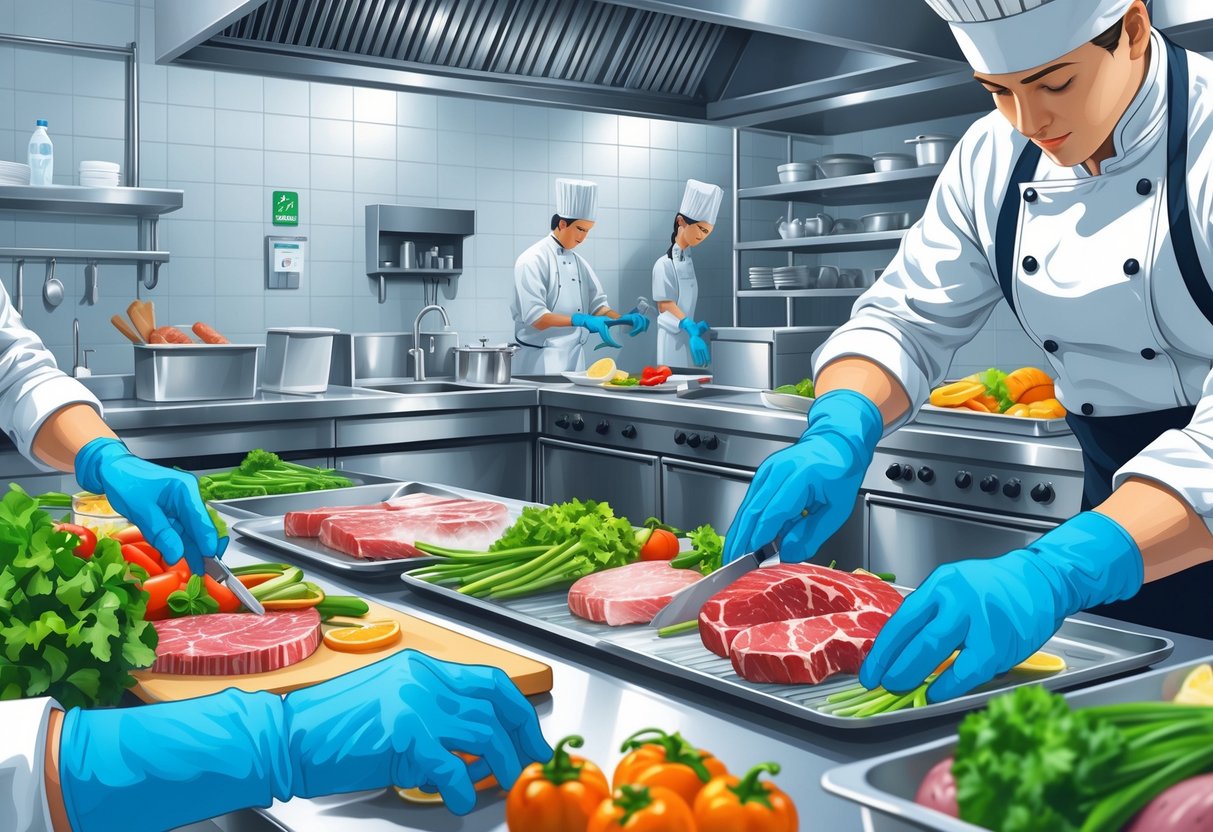
Nitrile gloves shield against contamination and help you stay on the right side of health regulations. They’re just more durable and reliable than other disposable gloves, plain and simple.
Role in Food Safety and Hygiene
Nitrile gloves put a solid barrier between your hands and the food you’re working with. That way, bacteria and germs don’t get a free ride from your hands onto someone’s plate.
Switching gloves between different tasks really matters. Say you’re handling raw chicken—change your gloves before you even think about touching veggies or cooked stuff.
Key contamination prevention benefits:
- Block transfer of harmful bacteria
- Prevent allergen cross-contact
- Reduce foodborne illness risks
- Maintain clean food preparation surfaces
Staff should swap out gloves as often as needed—after raw proteins, cleaning chemicals, or touching anything that isn’t food-related. Don’t skimp here.
Modern powder-free nitrile gloves also keep powder out of the food, which is good since the FDA banned powdered gloves in food service for health reasons.
Advantages Over Latex and Vinyl Gloves
Nitrile gloves honestly just beat latex and vinyl in most ways that matter in a kitchen. They’re more puncture-resistant and stand up to chemicals better than vinyl. That’s not just marketing—it’s the reality.
Material comparison:
| Feature | Nitrile | Latex | Vinyl |
|---|---|---|---|
| Puncture resistance | Excellent | Good | Poor |
| Chemical resistance | High | Moderate | Low |
| Allergy concerns | None | High risk | None |
| Durability | Superior | Good | Limited |
Latex gloves can trigger nasty allergies for both staff and customers—even tiny amounts can be a problem for some people.
Vinyl gloves? They tear way too easily when you’re hustling in a busy kitchen. They don’t hold up if you’re using sharp tools or working with rough ingredients.
Nitrile keeps its grip even when things get wet or greasy, which helps avoid accidents or dropping food during the rush. That’s something you’ll notice right away.
Ensuring Food Safety Compliance
Health departments require disposable gloves for various food-handling tasks, and nitrile gloves help you comply with these regulations every day.
Most food safety regulations spell out glove standards for specific tasks. Nitrile usually goes above and beyond those minimums—protection, durability, you name it.
Compliance benefits include:
- Meeting health code standards
- Passing food safety inspections
- Reducing violation risks
- Protecting business reputation
Pick the right thickness for what you’re doing—heavy-duty jobs need 5-mil gloves that can take a beating.
Train your staff on when and how to use gloves, and keep records so you’re ready if inspectors come knocking.
Allergy Prevention and Hand Health

Nitrile gloves protect your team and your customers from allergies and help everyone keep up with hand hygiene. No latex, no worries—just a safer kitchen for everyone.
Latex-Free Advantages
Nitrile gloves don’t have any natural rubber latex proteins, so they’re safe for folks with latex allergies.
Latex allergies affect up to 6% of people, and reactions can range from irritated skin to scary breathing problems. In a food-service setting, that’s a risk you just don’t want.
Key benefits of latex-free gloves:
- No allergic reactions from latex proteins
- Safe for workers with sensitive skin
- Reduced risk of contact dermatitis
- Better long-term hand health
Nitrile’s barrier protection is top-notch. It holds up better against punctures than latex, so you’re not swapping out gloves constantly.
Some folks wonder about nitrile allergies, but those are super rare and usually caused by chemicals from manufacturing, not the nitrile itself.
Reducing Staff and Customer Allergy Risks
Food allergies are a real concern for millions. Cross-contamination from gloves can cause serious reactions, so disposable food service nitrile gloves are a smart move for preventing those scary moments.
Staff protection benefits:
- No latex exposure during long shifts
- Reduced skin irritation and rashes
- Better hand hygiene compliance
- Fewer sick days from allergic reactions
Customers are safer, too—nitrile gloves keep allergens from moving between dishes. Just remember to change gloves between handling different allergens. It’s a simple step, but it matters.
Even with gloves, hand washing is still a must. Always wash up before putting on new gloves—just in case there’s a tiny hole or tear you didn’t notice.
Superior Durability and Puncture Resistance
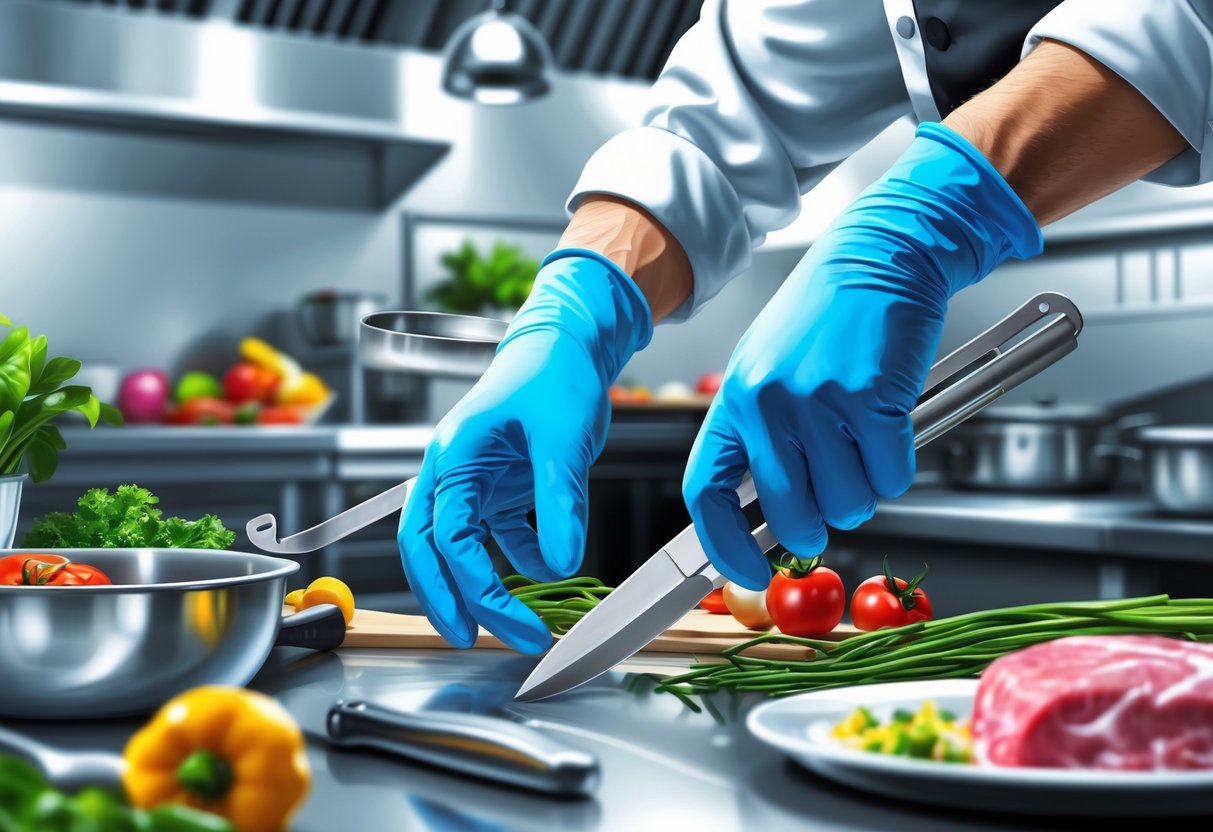
Nitrile gloves are about three times more puncture-resistant than latex and last way longer during the grind of kitchen work. If you’re dealing with sharp tools or raw meat, these gloves just make sense.
Long-Lasting Protection
Your nitrile gloves can handle long shifts—they don’t fall apart when you’re dealing with oils, grease, or cleaning supplies.
Key durability benefits:
- Resist punctures from kitchen utensils
- Maintain grip when wet or oily
- Don’t weaken from temperature changes
- Last longer than vinyl or latex options
You can count on these gloves during the rush. They won’t split when you’re chopping veggies or lugging heavy pans.
The material flexes instead of cracking, so you won’t be changing gloves all shift long. That’s less hassle and less waste.
Handling Raw Meat and Sharp Objects
Handling raw meat means you need gloves that don’t tear from bone fragments or sharp edges. Nitrile gloves put a solid barrier between your hands and bacteria like Salmonella.
Your gloves hold up when you’re dealing with:
- Sharp knives during food prep
- Bone-in meats with pointed edges
- Frozen foods with ice crystals
- Metal equipment and utensils
If a glove tears while you’re working with raw chicken, bacteria can spread fast. Nitrile’s elasticity helps the glove bounce back from pressure, so you keep that barrier intact even when you’re gripping tight.
Chemical and Oil Resistance in Busy Kitchens
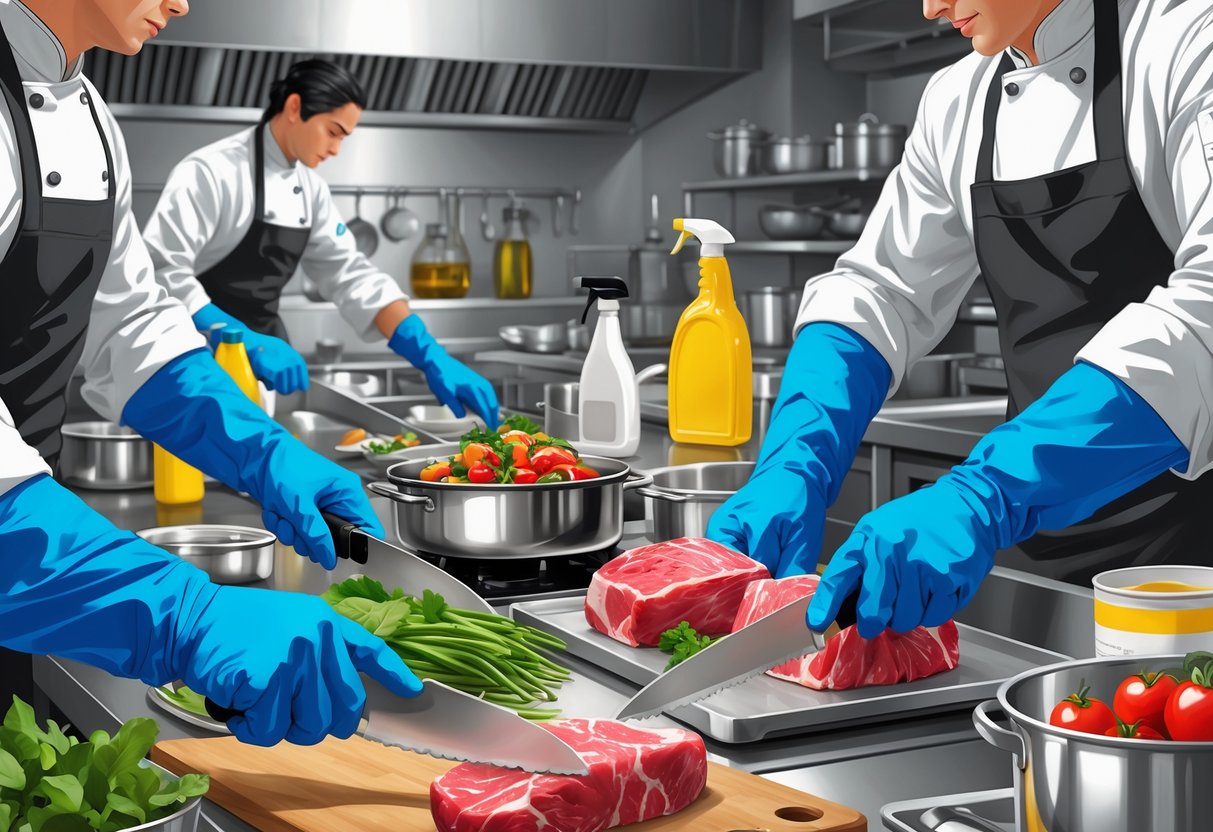
Nitrile gloves stand up to harsh cleaning chemicals and cooking oils that would wreck other gloves. That’s a big deal when you’re working long hours in a busy kitchen.
Protection Against Cleaning Agents and Food Ingredients
Kitchen staff deal with strong cleaners and acidic foods all the time. Nitrile gloves block bleach, sanitizers, and degreasers—stuff you need to use every day.
Unlike latex, nitrile keeps its strength when you’re handling citrus, vinegar, or tomato sauce. That makes them a go-to for prepping acidic foods that would eat through other gloves.
Nitrile’s synthetic rubber construction also keeps oils and fats from soaking through. You can handle greasy foods and not worry about your gloves falling apart or contaminating the meal.
They even protect against alcohol and a bunch of solvents found in kitchen cleaners. Cleaning up is just safer and easier with nitrile.
Minimizing Glove Degradation
Chemicals can make gloves break down, but nitrile resists that. You’ll go through fewer gloves during a busy shift, which is good for your budget and your workflow.
The material keeps its stretch and strength after contact with cleaning agents, so you’re less likely to get those annoying mid-shift tears.
Nitri-Cor Platinum food service gloves show off this kind of durability in real kitchens. Performance like that helps you keep standards up and glove waste down.
Longer wear between changes saves money and lets staff focus on the food, not on replacing gloves that just couldn’t keep up.
Fit, Comfort, and Tactile Sensitivity
Nitrile gloves give you that snug fit and tactile sensitivity you want for prep work. When you’re doing detailed stuff—cutting, plating, handling tiny ingredients—you need gloves that feel like a second skin.
Snug Fit for Precise Tasks
Nitrile stretches to fit your hand, so the gloves don’t slip around when you’re slicing or assembling plates.
The material lets your fingers move naturally. You can grab small things—herbs, garnishes—without the glove bunching up or getting in the way.
Vinyl gloves tend to be loose and distracting, but nitrile stays put, even when things get hectic. That means less fiddling and more focus.
A secure fit also keeps gloves from snagging on gear or hot pans. In a busy kitchen, that’s just one less thing to worry about.
Tactile Sensitivity for Safe Food Preparation
You can actually feel textures and temperatures through nitrile gloves. This tactile sensitivity lets you check if the meat’s cooked through or if the dough feels just right.
Because the material’s thin, you can pick up on tiny bones in fish or spot foreign objects hiding in ingredients. That keeps customers safer—nobody wants a surprise in their meal.
When plating, you notice how much pressure you’re using on delicate foods. It’s easier to avoid squishing soft fruits or snapping fragile garnishes.
That sensitivity helps with portioning, too. You can guess weights and sizes by touch, so serving sizes come out more consistent (well, most of the time).
Preventing Cross-Contamination and Foodborne Illnesses
Nitrile gloves put a barrier between your hands and the food, blocking bacteria from spreading around. Kitchens that use good glove habits and color codes cut down on the risk of making anyone sick.
Best Practices for Safe Food Handling
Switch your nitrile gloves between different food tasks. That way, bacteria from raw meat or dirty surfaces won’t make it to ready-to-eat foods.
Take gloves off if you touch things like phones or door handles. Always put on a new pair before you get back to food prep.
Wash your hands before you put on a fresh pair of gloves. Handwashing clears out bacteria that could get stuck under the gloves.
Don’t try to wash or reuse disposable nitrile gloves. They can get tiny holes that let germs sneak through—no thanks.
If a glove tears or gets damaged, swap it out right away. Even a small rip is enough for cross-contamination to happen.
Key glove change moments:
- After handling raw meat or seafood
- Before touching cooked or ready-to-eat foods
- After cleaning tasks
- Every 4 hours during continuous use
- When switching between allergen and non-allergen foods
Color-Coded Glove Options
Color-coded nitrile gloves make it way easier to keep tasks separate and avoid foodborne illnesses. You can spot mistakes fast if someone grabs the wrong color.
Black nitrile gloves are great for raw meat stations. The dark color hides stains and blood, and it marks high-risk areas clearly.
Blue gloves are usually for ready-to-eat foods like salads or sandwiches. The color pops against most foods, so it’s hard to miss.
Common color-coding system:
- Black: Raw meat and poultry
- Blue: Ready-to-eat foods
- Green: Vegetables and produce
- Orange: Dairy products
- Clear: General food handling
Put color charts right by the glove dispensers so staff remember which to grab. And seriously, train everyone—no mixing glove colors between food types.

Frequently Asked Questions
Food service managers almost always have questions about nitrile gloves and what makes them worth it. Honestly, these gloves bring better protection, durability, and even save money over time.
What are the advantages of using nitrile gloves in food service for hygiene and safety?
Nitrile gloves put a strong barrier between your hands and the food. They stand up to oils, grease, and weak acids that show up all over kitchens.
They keep you safe from raw meats and sour foods, and help stop bacteria and germs from jumping between your hands and the food.
Since nitrile doesn’t have latex proteins, you won’t run into latex allergies—always a relief for workers and customers.
Most nitrile gloves are powder-free, so you don’t get powder in the food or on your skin. That’s less irritation all around.
How do nitrile gloves outperform latex or vinyl gloves in commercial kitchens?
Nitrile gloves are three to five times tougher than latex. You can handle sharp bones or rough edges without stressing about rips.
They resist punctures better than vinyl gloves, which helps when you’re working with knives or other sharp tools.
Nitrile doesn’t fall apart when it hits oils and fats, unlike vinyl. So your gloves actually last through the job.
They fit snugly, which means you get better control compared to baggy vinyl gloves.
Can nitrile gloves help prevent cross-contamination in food preparation areas?
Absolutely. Nitrile gloves keep bacteria from hopping between different foods. You can swap gloves between raw meat and veggies without much fuss.
The smooth surface is easy to wipe down, and bacteria can’t hide in rough patches like they might on bare hands.
Nitrile gloves seal up your hands completely, blocking germs from slipping through small tears or gaps.
And if there’s a tear, it’s usually pretty visible—so you know when it’s time to change gloves before anything goes wrong.
Why might food service professionals prefer nitrile gloves for their durability?
Nitrile gloves just last longer during heavy kitchen work. You won’t have to change them as often as other types. They stand up to cleaning chemicals, so you can clean equipment and surfaces without your gloves breaking down.
The material handles hot and cold foods without getting brittle or weak, which is honestly pretty handy. Kitchen staff can keep up the pace without stopping to replace torn gloves all the time. That saves a lot of time during rushes.
In what ways do nitrile gloves provide better comfort and fit for kitchen staff?
Nitrile gloves stretch and mold to your hand shape, so they feel more natural than stiff vinyl. The material warms up as you wear it, which makes it comfortable even on long shifts.
They don’t stick to your skin like latex sometimes does. Getting them on and off is a breeze. Most workers say their hands get less tired wearing nitrile gloves, since the material moves with them during repetitive work.
What makes nitrile gloves a cost-effective option for food-service operations?
You end up using fewer nitrile gloves because they just don’t tear as often. Even if each glove costs a bit more, you actually save on your glove budget over time.
Disposable gloves, like nitrile ones, help keep foodborne illness lawsuits at bay. That kind of protection can really save you from expensive legal headaches.
When gloves don’t rip during prep, you waste less food. Ingredients stay protected, and you don’t have to toss out as much stuff.
Staff can move faster and get more done when they’re not worrying about gloves falling apart. That means labor costs drop and the kitchen runs smoothly, especially when things get hectic.

 What Are The Best Freezer Boots To Buy For Maximum Warmth And Durability
Leave a Reply