
Nitrile gloves give you reliable protection in medical, industrial, and everyday tasks. They’re made from synthetic rubber, so they’re a strong alternative to latex and work well for anyone with latex allergies.
You can count on nitrile gloves for durability, chemical resistance, and comfort in a wide range of situations.

You use them when handling food, cleaning, working on cars, or managing chemicals. Their puncture resistance makes them safer than many other disposable options.
The snug fit allows you to keep good control of your hands. With different thicknesses, textures, and colors available, you can pick the right style for whatever you’re doing.
Key Takeaways
- Nitrile gloves offer strong protection and comfort across many tasks
- Different types, colors, and thicknesses suit specific needs
- Choosing the right pair improves safety and performance
What Are Nitrile Gloves?
Nitrile gloves are disposable gloves made from nitrile butadiene rubber (NBR), a synthetic material created by combining acrylonitrile and butadiene. Unlike latex, which comes from natural rubber, nitrile is fully man-made.
You’ll often spot nitrile gloves in healthcare, food service, cleaning, automotive, and industrial settings. They’re valued because they resist punctures, tears, and many chemicals better than latex or vinyl gloves.
A key benefit is that nitrile gloves are latex-free, which lowers the risk of allergic reactions. That makes them a safer option if you or your coworkers have sensitivities to natural rubber.
Common Features of Nitrile Gloves
- Durability: Stronger resistance to punctures than latex or vinyl
- Chemical resistance: Better protection against oils, solvents, and some harsh cleaners
- Comfort: Flexible and lightweight for longer wear
- Hypoallergenic: Free from natural latex proteins
Quick Comparison
| Feature | Nitrile Gloves | Latex Gloves | Vinyl Gloves |
|---|---|---|---|
| Material | Synthetic rubber | Natural rubber | PVC (plastic) |
| Allergy Risk | Low | Higher | Low |
| Chemical Resistance | High | Moderate | Low |
| Puncture Resistance | High | Moderate | Low |
You can choose nitrile gloves in different thicknesses and textures depending on the task. Thinner gloves offer more dexterity, while thicker ones provide extra protection.
Key Features of Nitrile Gloves
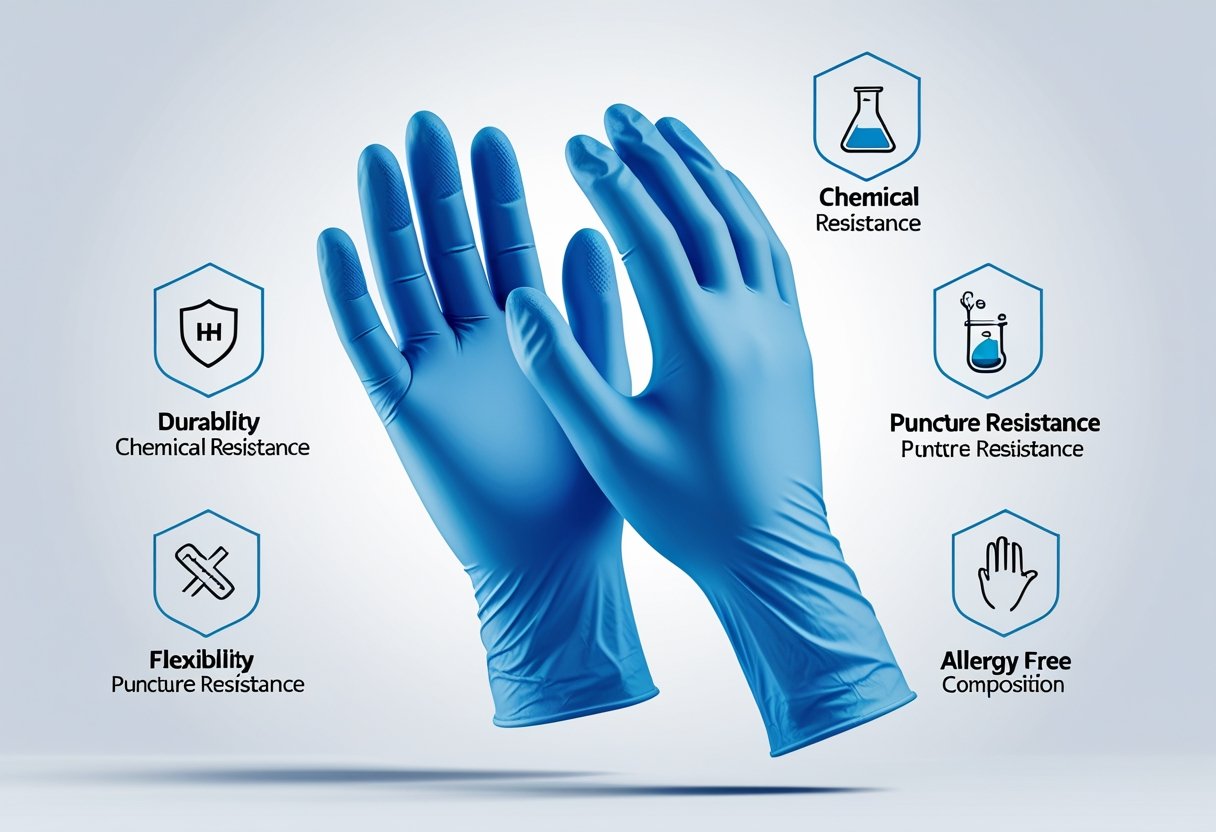
Nitrile gloves provide reliable protection for your hands by reducing allergy risks and offering strong resistance to tearing. They also protect against chemicals and punctures.
Their design makes them suitable for healthcare, food handling, and industrial work where safety and durability are priorities.
Latex-Free and Allergy Prevention
Nitrile gloves are made from synthetic rubber instead of natural latex. This means you avoid the risk of latex-related allergic reactions, which can cause skin irritation or worse in sensitive individuals.
You benefit from a glove that’s hypoallergenic and safe to use, even if you or others around you have latex allergies. This makes nitrile a dependable option in shared environments like hospitals, clinics, or food service, where exposure risks are higher.
Unlike latex, nitrile doesn’t contain proteins that trigger allergies. You can wear them for extended periods without the same concern for skin irritation.
Durability and Tear Resistance
Nitrile gloves are built to last longer under stress compared to latex or vinyl. The material has a higher resistance to stretching and tearing, which means you can handle tasks that involve frequent movement or pressure without worrying about the gloves breaking.
Because of their strong tensile strength, you can rely on them in demanding settings like automotive work, cleaning, or handling sharp tools. They maintain their shape and performance even when exposed to friction or repeated use.
This durability also reduces the number of gloves you need to replace during a shift. That helps save both time and resources, especially in busy environments where efficiency matters.
Chemical and Puncture Resistance
One of the most important advantages of nitrile gloves is their ability to resist oils, solvents, and many chemicals. You can safely use them when working with cleaning agents, laboratory substances, or automotive fluids that would quickly break down other glove materials.
They also provide better puncture resistance than latex. This helps protect you from accidental contact with needles, sharp tools, or rough surfaces.
While not completely puncture-proof, they lower the risk of skin exposure in high-risk tasks. You can use nitrile gloves in industries such as healthcare, manufacturing, and food service with confidence.
Types of Nitrile Gloves
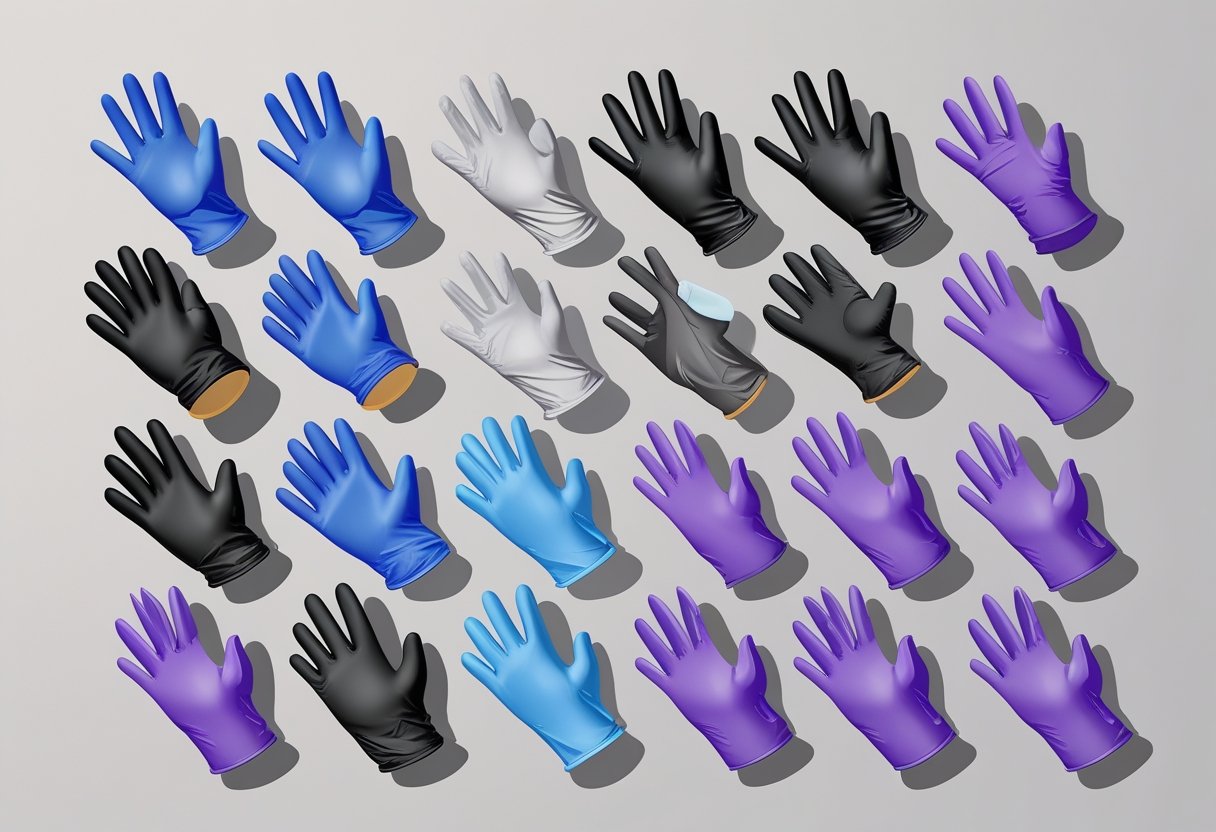
Nitrile gloves are made in different forms to meet the needs of healthcare, food handling, and industrial work. Some are designed for single use, while others are built for durability and repeated wear.
Disposable Nitrile Gloves
Disposable nitrile gloves are the most common type you’ll find in workplaces. They’re designed for single use and provide a reliable barrier against chemicals, oils, and biological hazards.
You often see them in healthcare, food service, cleaning, and automotive work. Their popularity comes from being latex-free, which lowers the risk of allergic reactions.
They also resist punctures better than latex or vinyl gloves, making them safer for tasks involving sharp tools or rough surfaces. Thickness can vary from lightweight options for food prep to thicker gloves for industrial use.
When choosing disposable gloves, you should consider how much dexterity you need compared to the level of protection required.
Reusable Nitrile Gloves
Reusable nitrile gloves are thicker and more durable than disposable ones. You can wear them multiple times, as long as they’re cleaned and stored properly.
They’re often used in manufacturing, laboratories, and heavy-duty cleaning tasks. These gloves provide stronger resistance to chemicals like solvents, acids, and oils.
Because of their durability, they’re better suited for long tasks where disposable gloves would wear out quickly. Reusable gloves usually have textured surfaces for better grip and come in different lengths to protect the wrist and forearm.
You should replace them once you see signs of wear, such as thinning, cracking, or loss of elasticity.
Medical Grade Nitrile Gloves
Medical-grade nitrile gloves are tested to meet strict safety standards for use in hospitals, clinics, and dental offices. They’re designed to protect both you and the patient from cross-contamination and exposure to bloodborne pathogens.
These gloves are usually powder-free to reduce the risk of irritation and contamination. They also undergo testing for durability, puncture resistance, and barrier protection against viruses and bacteria.
You’ll find them in different thickness levels, with thinner options for precision tasks and thicker options for higher-risk procedures.
Common Uses and Applications

You can rely on nitrile gloves in many work environments where safety, hygiene, and durability matter. They protect your hands from contamination, chemicals, and injury while allowing you to perform tasks that require precision.
Healthcare and Medical Settings
You’ll often see nitrile gloves in hospitals, clinics, and laboratories. They’re used during patient exams, blood draws, and minor procedures to reduce the risk of cross-contamination.
Unlike latex, nitrile is less likely to cause allergic reactions, making it safer for both patients and staff. Sterile nitrile gloves are commonly chosen for surgical settings, while non-sterile versions are used for general patient care.
Their puncture resistance helps protect against accidental needle sticks and contact with infectious materials. In medical waste disposal, nitrile gloves give you an added layer of protection when handling contaminated items.
Their durability makes them suitable for long shifts without frequent replacement.
Industrial and Manufacturing
In industrial work, nitrile gloves help protect your skin from oils, solvents, and harsh chemicals. They’re commonly used in chemical plants, electronics assembly, and manufacturing lines where exposure to irritants is frequent.
You can select gloves in different thicknesses depending on the task. Thicker nitrile gloves provide stronger protection against cuts and abrasions, while thinner ones allow better dexterity for detailed work.
Nitrile also resists tearing, which makes it more reliable than vinyl or latex in heavy-duty environments. Workers handling adhesives, paints, or cleaning agents often prefer nitrile because it holds up well against repeated contact with chemicals.
Food Handling and Preparation
When you work with food, nitrile gloves help prevent contamination between your hands and ingredients. They’re widely used in restaurants, catering services, and food processing plants.
Nitrile is food-safe and resistant to oils and fats, making it a better option when handling raw meat, seafood, or greasy foods. Unlike latex, nitrile doesn’t break down easily when in contact with animal fats.
You can also benefit from their snug fit, which allows you to handle knives and kitchen tools safely without losing grip. Many food service operations choose blue nitrile gloves because the color makes it easier to spot if a piece tears and falls into food.
Automotive and Mechanical Work
In automotive repair and mechanical work, nitrile gloves protect your hands from fuels, oils, and cleaning agents. They’re resistant to many automotive chemicals that can quickly damage other glove materials.
You can wear nitrile gloves while changing oil, handling brake fluid, or working with solvents. Their puncture resistance also helps when dealing with sharp parts or tools.
Mechanics often prefer textured nitrile gloves because they improve grip on small or slippery components. The gloves also reduce skin irritation from long-term exposure to grease and chemicals, letting you work more comfortably and safely.
Selecting the Right Nitrile Gloves
The right nitrile gloves depend on how much protection you need, how well they fit your hands, and whether you need extra grip. Each of these factors affects comfort, durability, and safety during use.
Thickness and Protection Levels
Nitrile gloves come in a range of thicknesses, usually measured in mils (1 mil = 0.001 inch). Thinner gloves, around 2–3 mils, offer more touch sensitivity and flexibility.
They’re great for food handling, light cleaning, or medical exams where you need to feel what you’re doing. Honestly, if you want to forget you’re even wearing gloves, this is the way to go.
Medium-thickness gloves, between 4–6 mils, hit that sweet spot between strength and comfort. They resist punctures better than the thinner ones, but don’t make your hands feel trapped.
You’ll see these a lot in labs, auto shops, and various industrial settings. They’re kind of the all-rounders of the glove world.
Heavy-duty gloves, 7 mils or more, are the tanks—built for maximum protection. They stand up to tears, chemicals, and rough materials, though they can feel a bit stiff.
Mechanics, manufacturers, or anyone dealing with sharp or abrasive stuff tend to reach for these. They’re not exactly subtle, but sometimes you just need that extra armor.
| Thickness | Typical Use | Pros | Cons |
|---|---|---|---|
| 2–3 mils | Food prep, exams | High dexterity | Less durable |
| 4–6 mils | Lab, auto work | Balanced strength | Moderate flexibility |
| 7+ mils | Heavy industry | Strong protection | Reduced sensitivity |
Sizing and Fit
Getting the right size matters—a lot. Gloves that are too tight can rip, and loose ones just get in the way or slip off at the worst time.
Nitrile gloves usually come in small, medium, large, and extra-large. Some brands throw in extra-small or extra-large, which is nice if you’re on the edges of the bell curve.
To figure out your size, measure the width of your palm at its widest spot. Then check it against the manufacturer’s size chart—don’t just guess.
You want a fit that’s snug but not cutting off your circulation. That way, you can move your hands without feeling like you’re fighting the gloves.
Poor fit can cause hand fatigue, especially if you’re wearing gloves for hours. If you’re stuck in gloves all day, getting the right size is non-negotiable.
Textured vs. Smooth Surfaces
The glove’s surface design changes your grip. Textured gloves—think raised fingertips or patterned palms—help you hold onto wet or oily stuff.
They’re a go-to for medical, lab, or industrial work where dropping things can get messy or dangerous. I mean, nobody wants slippery gloves when handling glassware or tools.
Smooth gloves feel cleaner and slide on and off more easily. They’re popular for food handling, light cleaning, or when grip isn’t such a big deal.
Some gloves mix it up with textured fingertips and smooth palms. That way, you get grip where you need it but they’re still easy to wear.
Color and Style Options
Nitrile gloves come in all sorts of colors and finishes, and it’s not just for looks. The color you pick can matter for safety, contamination control, or just keeping things looking professional.
Purpose of Different Colors
Color makes it easy to spot which gloves are for what. In healthcare, blue and light blue are standard because they show tears or contamination right away.
Black gloves? Mechanics, tattoo artists, and law enforcement like them since they hide grease, ink, or blood—no one needs to see all that.
Food service workers might use white or clear gloves to show they’re clean. In labs and hospitals, green or purple gloves can help keep departments or chemical uses separate.
Sometimes, workplaces use several colors at once. One color for raw food, another for cooked—keeps things organized and helps avoid cross-contamination.
Design and Branding Considerations
Glove color can also tie in with your workplace vibe. Some places pick glove colors to match uniforms or branding. Salons, for example, might go for pink or purple for a stylish touch.
Finishes and textures vary, too. You’ll find matte or glossy looks, and some gloves add textured fingertips for grip. It’s not just about looks—these details can make a difference in how they feel and work.
If you’re ordering a ton, some suppliers will even do custom colors. That’s handy for keeping everyone on the same page and giving your team a unified look.
Nitrile Gloves vs. Other Glove Materials
Nitrile gloves are known for their strength, chemical resistance, and the fact that they don’t trigger latex allergies. Comparing them to latex and vinyl, you’ll notice differences in comfort, durability, price, and where they work best.
Nitrile vs. Latex Gloves
Latex gloves are softer and more flexible, so they’re perfect when you need to feel everything—like during medical exams. The catch? Latex can cause allergic reactions, which is a dealbreaker for some folks, especially in healthcare or food service.
Nitrile gloves avoid the allergy issue and offer better resistance to chemicals, oils, and punctures. If you’re dealing with hazardous stuff or need gloves that won’t give out easily, nitrile’s the safer bet.
- Comfort: Latex is more stretchy and feels natural.
- Durability: Nitrile stands up better to punctures and tears.
- Safety: Nitrile sidesteps allergy problems.
- Use cases: Latex is fine for quick, low-risk jobs; nitrile is better for tough or risky tasks.
Nitrile vs. Vinyl Gloves
Vinyl gloves are cheaper and good for quick, low-risk jobs like food prep. They fit looser and tear more easily, so don’t expect much protection from chemicals or germs.
Nitrile costs more, but you get stronger protection, a better fit, and more flexibility. They’re also way more reliable around oils, solvents, and other harsh stuff.
| Feature | Nitrile Gloves | Vinyl Gloves |
|---|---|---|
| Durability | High | Low |
| Chemical resistance | Strong | Weak |
| Comfort & Fit | Snug, flexible | Loose, less flexible |
| Cost | Higher | Lower |
So, if safety and durability are your top priorities, go with nitrile. If you just need basic coverage and want to save money, vinyl might do the trick.
Proper Usage and Best Practices
Using nitrile gloves the right way is key to protecting your hands and keeping things clean. How you put them on, take them off, and store them makes a difference.
How to Wear and Remove Nitrile Gloves
Before you put on nitrile gloves, check for tears, punctures, or weak spots. Damaged gloves? Toss them.
Wash and dry your hands first—clean hands mean less contamination. Pick the right size; too tight and they’ll rip, too loose and you’ll fumble.
When putting them on, grab the cuff, not the fingers, to avoid stretching things out. Make sure they fit snugly but don’t cut off your circulation.
If you’re switching between tasks, change gloves each time. Reusing them just isn’t worth the risk.
Here’s how to take gloves off without making a mess:
- Pinch the outside of one glove at the wrist.
- Peel it off, turning it inside out as you go.
- Hold the first glove in your gloved hand.
- Slide your ungloved finger under the wrist of the remaining glove and peel it off.
Throw used gloves in the trash, not on the floor. And always wash your hands when you’re done—seriously, don’t skip that step.
Storage and Shelf Life
Keep nitrile gloves in a cool, dry place, away from sunlight, heat, and chemicals. Heat and UV light can mess with the material, making gloves more likely to tear.
Don’t store them in damp spots, either—moisture can break down the material over time. Leave gloves in their original box until you need them; it keeps out dust and accidental damage.
Stacking heavy stuff on glove boxes? Not a great idea. Compression can weaken the gloves inside.
Stored properly, nitrile gloves last about 3 to 5 years. Always check the expiration date on the box—expired gloves lose strength and stretch. Use up older boxes first so nothing goes to waste.
Safety and Regulatory Standards
When you’re picking nitrile gloves, consider the safety and performance standards they meet. These guidelines help you know if a glove is good for medical, industrial, or food use.
Medical-grade nitrile gloves have to meet FDA regulations since they’re used in healthcare. The FDA calls them Class I medical devices, so they need a 510(k) premarket notification before they hit the shelves.
The ASTM D6319 standard sets the rules for nitrile exam gloves—covering strength, size, powder residue, and sterility. If you’re in patient care or a lab, this is the one to look for.
Industrial-grade nitrile gloves skip the medical sterility requirements. They’re all about durability and chemical resistance, perfect for auto repair, manufacturing, or cleaning jobs.
Some gloves are also tested under ASTM F1671 for resistance to viral penetration—important in healthcare and labs.
| Type of Glove | Key Standard / Regulation | Main Use Case |
|---|---|---|
| Medical-grade nitrile | FDA + ASTM D6319 | Healthcare, labs, patient care |
| Industrial-grade nitrile | Manufacturing, automotive, and cleaning | Manufacturing, automotive, cleaning |
| Food-safe nitrile | FDA food contact rules | Food handling and preparation |
Checking these standards helps you pick the right glove for whatever you’re up against.
Environmental Impact and Disposal
Nitrile gloves are made from synthetic rubber, using petroleum-based materials like acrylonitrile and butadiene.
The production process eats up a lot of energy and resources, which is really where most of the environmental impact comes from.
Transportation and packaging tack on even more to the overall footprint.
Since nitrile gloves are single-use, disposal is a big issue.
Traditional nitrile gloves don’t break down quickly—they can sit in landfills for decades, if not longer.
So, it’s worth thinking about waste management if you want to cut down on long-term effects.
You can try to lower the impact of glove use by:
- Reducing unnecessary use with better hand hygiene
- Segregating waste to keep gloves out of regular recycling
- Supporting recycling programs if they’re available
- Exploring alternatives like biodegradable nitrile gloves
Biodegradable nitrile gloves are made to break down faster than the regular kind.
Still, they need certain landfill conditions to actually decompose, so they’re not a perfect fix.
The table below shows common disposal options:
| Disposal Method | Environmental Impact | Notes |
|---|---|---|
| Landfill | High | Gloves remain for decades or longer |
| Incineration | Moderate | Reduces volume but releases emissions |
| Specialized Recycling | Lower | Limited availability, requires clean gloves |
| Biodegradable Gloves | Lower (conditional) | Needs proper landfill conditions |
Where to Buy Nitrile Gloves
Nitrile gloves are pretty easy to find at big retailers.
Stores like Walmart, Target, Walgreens, CVS, and Staples usually have disposable options for home, medical, or work needs.
They come in different sizes and thicknesses, so you can pick what works for you.
Online marketplaces like Amazon and Tractor Supply have a huge range, too.
If you buy in bulk online, you might save a bit if you go through a lot of gloves.
If you’re in a hurry to compare, here’s a table with some popular buying options:
| Retailer | Key Features | Buying Options |
|---|---|---|
| Walmart | Medical-grade, food safe | In-store & online |
| Amazon | Large variety, bulk packs | Online only |
| Home Depot | Cleaning and utility use | In-store & online |
| Tractor Supply | Heavy-duty, farm and auto use | In-store & online |
| Walgreens/CVS | Heavy-duty, farm, and auto use | In-store & online |
If you need a ton of gloves or something more specific, it might be worth placing a custom order request.
That way, you can get what you want in the right amount. Discount websites are out there, too—handy if you’re trying to stock up without breaking the bank.
Frequently Asked Questions
People use them in healthcare, food handling, and other places where hygiene matters. Nitrile gloves give you solid protection, comfort, and versatility in all sorts of settings.
What are the advantages of using nitrile gloves compared to latex gloves?
Nitrile gloves don’t have natural rubber latex, so they’re less likely to cause allergic reactions. They’re also tougher against punctures and a lot of chemicals, especially compared to latex. Honestly, you’ll probably notice they hold up better if you’re doing tougher jobs.
Are nitrile gloves suitable for use in food preparation and cooking?
Yes, you can use nitrile gloves for food handling. They help prevent cross-contamination, which is why a lot of kitchens rely on them for switching between tasks.
How can I find nitrile gloves available for purchase in my area?
We carry all types of nitrile gloves. And can supply what you need. Call us at 714-308-3852.
What are the common applications for using nitrile gloves?
You see nitrile gloves in healthcare, labs, food service, cleaning, and automotive work. They’re good at protecting against oils, chemicals, and infectious stuff, and they’re tough enough for most jobs.
Where can I buy nitrile gloves online?
They’re all over major online retailers like Amazon and Walmart, plus specialty safety supply sites. Some manufacturers even sell directly from their websites if you want to go straight to the source.
What are the benefits of using black nitrile gloves over other colors?
Black nitrile gloves are great at hiding stains from grease, ink, or dyes. That’s a big reason you’ll spot them in automotive shops, tattoo studios, and all sorts of industrial settings. They provide the same level of protection as other nitrile gloves. Plus, there’s just something about the sleek, professional look that some workplaces like.


Leave a Reply